
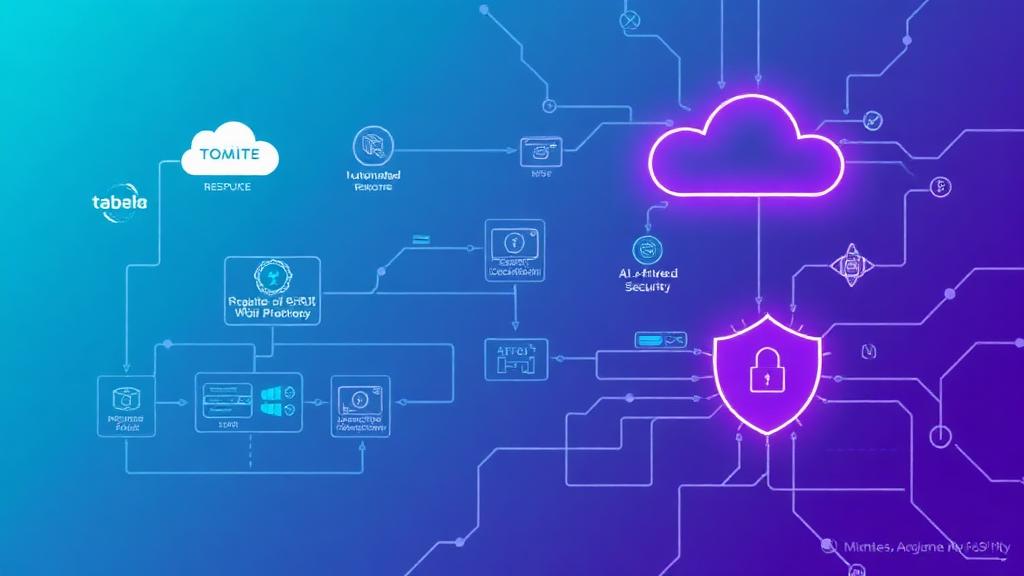
Automation in SecOps
SOAR (Security Orchestration, Automation and Response) automates response playbooks, enriches alerts with threat intel, performs automatic containment, and reduces MTTR from hours to minutes.
What is SOAR?
SOAR combines three essential capabilities: Orchestration of security tools, Automation of repetitive tasks, and Response coordinated to incidents. SOAR platforms such as Palo Alto Cortex XSOAR, Splunk Phantom, and IBM Resilient connect SIEM, EDR, firewalls, threat intel, and other tools into automated workflows.
Benefits of Automation
- MTTR reduction: Automatic response cuts containment time from hours to minutes
- Scalability: Handles a growing volume of alerts without scaling the team proportionally
- Consistency: Playbooks ensure the same response quality regardless of the analyst
- Enrichment: Automatic queries to threat intel, WHOIS, and VirusTotal for context
- Documentation: All actions are logged automatically for auditing
Common Use Cases
1. Phishing Response
When a suspicious email alert arrives: it extracts IOCs (URLs, attachments), queries VirusTotal/threat intel, searches for other similar emails, quarantines messages, blocks the sender at the gateway, notifies affected users, and creates an investigation ticket — all in seconds without manual intervention.
2. Malware Containment
Malware detection via EDR triggers: automatic isolation of the endpoint from the network, collection of forensic artifacts, a search for IOCs across other systems, blocking of C2 domains at the firewall, a snapshot of the compromised VM, and escalation to an analyst if active malware is confirmed.
3. Vulnerability Management
The scanner identifies a critical vulnerability: it enriches with CVSS, exploitability (EPSS), and business context, prioritizes by real criticality, creates tickets for patching, checks WAF rules as temporary mitigation, monitors exploit attempts, and reports status to stakeholders.
SOAR Implementation
Phase 1: Process Mapping
Document workflows that are currently executed manually: alert triage, IOC enrichment, phishing response, malware investigation. Identify tasks that are repetitive, time-consuming, and prone to human error.
Phase 2: Prioritization
Start with "quick wins": simple automations with high impact (e.g., automatic enrichment of IPs with VirusTotal). Then move on to complex playbooks. Focus on high-volume scenarios (phishing, malware alerts).
Phase 3: Playbook Development
Build modular and reusable playbooks. Use decision trees for conditional logic (if malware confirmed → isolate, if false positive → close ticket). Test extensively in a lab environment before production.
Phase 4: Integration
Connect SOAR with: SIEM (alert ingestion), EDR/XDR (containment actions), Threat Intel Platforms (enrichment), Ticketing (ServiceNow, Jira), Email Gateway, Firewall/IPS, AD/IAM. REST APIs are key to integrations.
Phase 5: Tuning and Optimization
Monitor metrics: % of alerts handled automatically, MTTR reduction, false-positive rate, time saved. Refine playbooks based on feedback. Balance automation vs. human oversight for critical decisions.
Best Practices
- Human-in-the-loop: Destructive actions (isolating a prod server) require human approval
- Rollback capability: Allow automatic actions to be undone if necessary
- Rigorous testing: Test playbooks with real data and edge-case scenarios
- Documentation: Keep playbooks documented and versioned (GitOps)
- Training: The team must understand playbook logic for troubleshooting
- Metrics: Track KPIs: MTTR, automation rate, analyst hours saved
Common Challenges
- Initial complexity: A steep learning curve that requires expertise in APIs and logic
- Maintenance: Integrations break when vendors change APIs, requiring ongoing maintenance
- Over-automation: Automating too much removes the human context needed for nuanced decisions
- False positives: Automation amplifies the impact of FPs — rigorous tuning is essential
- Tool sprawl: Tool proliferation makes orchestration harder
Success Metrics
- MTTR (Mean Time to Respond): Reduction from hours → minutes for containment
- Automation Rate: % of alerts fully resolved without human intervention
- Analyst Efficiency: Hours saved per week on manual tasks
- Alert Handling Capacity: Increase in alerts processed without growing the team
- Consistency: Reduced variability in response quality
SOAR ROI
Organizations report:
- • 70-90% reduction in incident response time
- • 5-10x increase in alerts processed per analyst
- • 30-50% savings in manual work hours
- • 40-60% improvement in incident resolution time
Investment in SOAR typically pays for itself in 6-12 months, especially in SOCs with high alert volumes.