
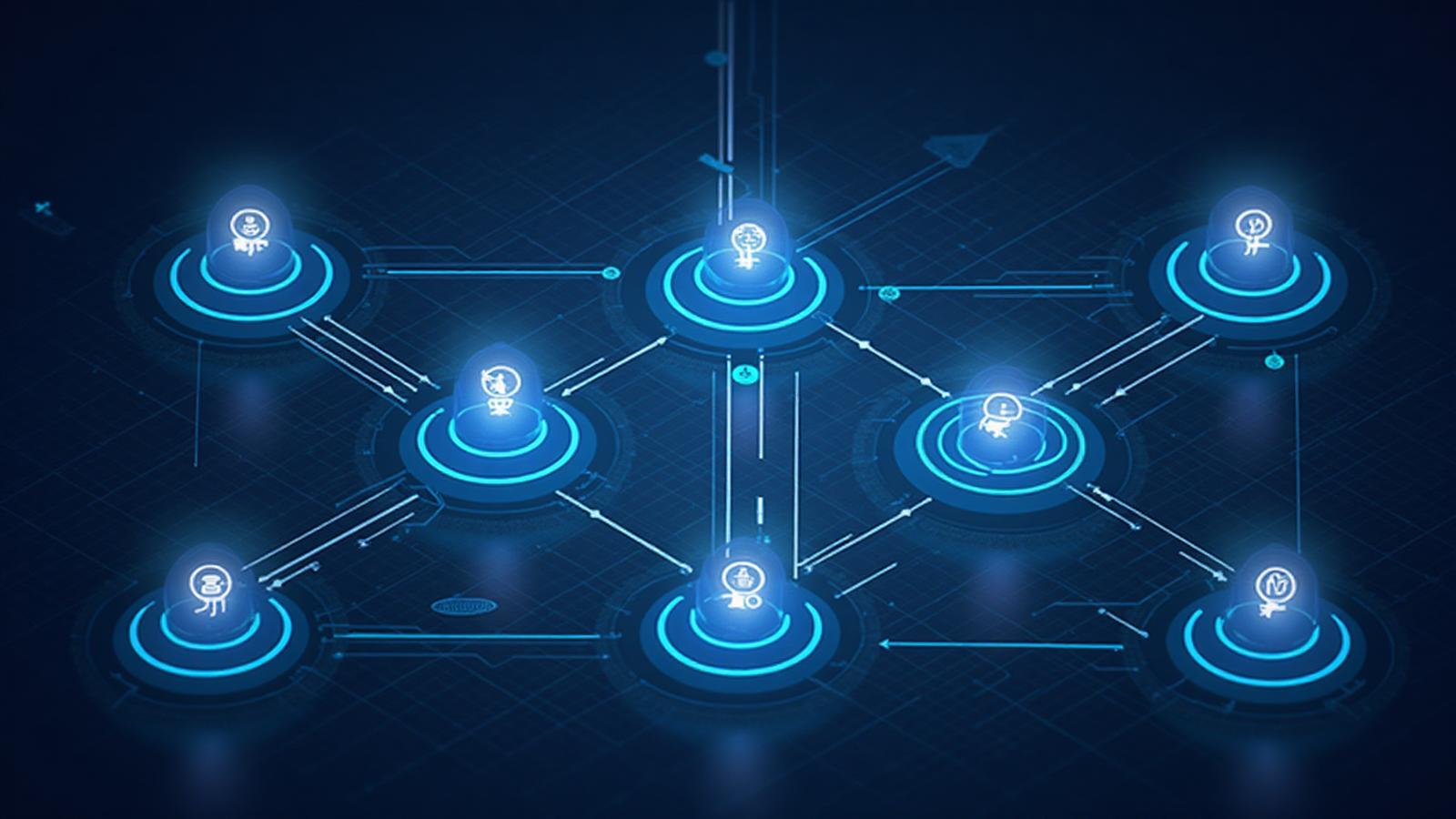
Zero Trust Architecture
What is Zero Trust?
Zero Trust is a security model based on the principle "never trust, always verify." Unlike traditional perimeter-based models, Zero Trust assumes that threats exist both outside and inside the network, eliminating implicit trust in any entity.
Core Principles
1. Continuous Verification
Every request is authenticated, authorized, and encrypted before access is granted. Verification does not happen only at login, but continuously throughout the entire session.
- Mandatory multi-factor authentication (MFA)
- Continuous behavior analysis
- Risk-based re-authentication
- Context monitoring (location, device, time)
2. Least Privilege
Users and systems receive only the minimum permissions needed to perform their functions. Access is granted in a granular and time-bound manner.
- Just-In-Time (JIT) access
- Just-Enough-Access (JEA)
- Separation of duties
- Periodic permission reviews
3. Assume Breach
Operates under the assumption that breaches have already occurred or will occur. It focuses on minimizing the blast radius and detecting lateral movement quickly.
Components of the Zero Trust Architecture
Policy Engine (PE)
The central component that makes access decisions based on policies. It considers:
- Identity: Who is making the request
- Device: Security state of the endpoint
- Network: Source and destination of the request
- Application: Resource being accessed
- Data: Sensitivity of the information
- Behavior: Anomalous patterns
Policy Administrator (PA)
Executes the Policy Engine's decisions, establishing or terminating connections between subjects and resources.
Policy Enforcement Point (PEP)
Gateways that intercept requests and apply policies. They can be:
- Reverse proxies
- Web application firewalls (WAF)
- Service meshes (Istio, Linkerd)
- API gateways
- Software-defined perimeters (SDP)
Practical Implementation
Phase 1: Asset Mapping
- Identify all resources (applications, data, services)
- Classify by criticality and sensitivity
- Map data flows between components
- Document identities and devices
Phase 2: Microsegmentation
Divide the network into small, isolated zones to maintain granular control:
- Segment by workload, not by physical location
- Implement firewalls between microsegments
- Apply specific policies per segment
- Monitor east-west traffic
Phase 3: Identity and Access Management (IAM)
A fundamental foundation of Zero Trust:
- SSO: Single Sign-On with a centralized IdP
- MFA: Adaptive multi-factor authentication
- RBAC/ABAC: Role-based/attribute-based access control
- PAM: Privileged access management
Phase 4: Device Trust
Verify the integrity and security posture of devices:
- Endpoint Detection and Response (EDR)
- Mobile Device Management (MDM)
- Device compliance checks
- Patching status verification
- Certificate-based authentication
Phase 5: Monitoring and Analytics
Continuous visibility is essential:
- SIEM for event correlation
- UEBA for anomaly detection
- Network traffic analysis
- Threat intelligence integration
Technologies and Tools
Software-Defined Perimeter (SDP)
Creates individualized logical perimeters:
- Google BeyondCorp: Zero Trust for the workforce
- Zscaler ZPA: Private Access without VPN
- Cloudflare Access: Application-level isolation
- Palo Alto Prisma Access: SASE platform
Service Mesh
For containerized environments and microservices:
- Istio: mTLS, policies, observability
- Linkerd: Lightweight service mesh
- Consul: Service discovery and mesh
Identity Providers
- Okta: Enterprise IAM
- Azure AD: Microsoft identity platform
- Auth0: Developer-friendly authentication
- Keycloak: Open-source IAM
NIST 800-207 Framework
NIST defines seven tenets of Zero Trust:
- All data sources and computing services are considered resources
- Communication is secured regardless of network location
- Access to resources is granted on a per-session basis
- Access is determined by dynamic policy
- The organization monitors and measures the integrity of assets
- Authentication and authorization are dynamic and strictly enforced
- The organization collects as much information as possible to improve its posture
Implementation Challenges
Technical Complexity
- Integration with legacy systems
- Multiple point solutions
- Additional latency in verifications
- Team learning curve
Organizational Impact
- Significant cultural change
- User resistance to extra controls
- High initial cost
- Long implementation time (2-3 years)
Visibility Challenges
- Shadow IT hinders complete mapping
- Hybrid and multi-cloud environments
- IoT and unmanaged devices
- Third-party access
Best Practices
- Start small: Implement in a critical pilot application
- Prioritize identity: Strong IAM is the foundation
- Automate: Manual policies do not scale
- Educate users: Communicating changes is crucial
- Iterate constantly: Zero Trust is a journey, not a destination
- Measure everything: Security metrics and KPIs
- Plan for DR: Failover and business continuity
Use Cases
Remote Workforce
Eliminates traditional VPNs, providing secure access from anywhere without exposing the entire corporate network.
Cloud Migration
Simplifies security in multi-cloud environments, applying consistent policies regardless of the provider.
Third-Party Access
Grants granular access to partners and vendors without creating broad trust.
The Future of Zero Trust
AI/ML Integration
Access decisions based on machine learning that analyzes behavioral patterns in real time.
Quantum-Safe Zero Trust
Preparing for quantum computing with post-quantum cryptography integrated into the architecture.
Extended Zero Trust
Expansion to IoT, OT (Operational Technology), and cyber-physical systems.
Zero Trust represents a fundamental shift from perimeter to identity. Although complex to implement, it offers robust protection in an increasingly distributed and cloud-first world. Organizations should approach it as an iterative journey, starting with the most critical resources and expanding gradually.